Most shop floors don’t stay dirty because crews aren’t cleaning often enough. They stay dirty because the product being used isn’t built for the mess that’s actually on the floor. Oil stains, forklift tire marks, tracked-in dirt, and stubborn floor residue create different cleaning challenges, yet many facilities try to solve them with the same solution. So crews clean again. And costs keep climbing. The right degreaser can help break that cycle. In this article, we’ll explain how to choose a degreaser for shop floor cleaning and what factors can help improve results while controlling labour and chemical costs. Explore our industrial degreaser solutions if you’re comparing products for your facility. Yet many facilities expect one cleaning approach to handle all of it. That’s where problems start. Shop floors collect more than visible dirt. Oil, grease, dust, moisture, and production residue build up over time. Some stay on the surface. Some settle in. The result is simple. Floors take longer to clean, require more product, and consume more labour.Many facilities respond by cleaning more often. That’s not always the answer. Sometimes the problem isn’t the cleaning schedule. It’s the product being asked to do a job it wasn’t designed to do.
Why Shop Floors Create Unique Cleaning Challenges
Walk through enough industrial facilities and you’ll start noticing the same thing. The floor near a maintenance bay doesn’t look like the floor beside a production line. Loading dock traffic creates a different mess than hydraulic equipment. High-traffic routes collect grime differently than low-traffic corners.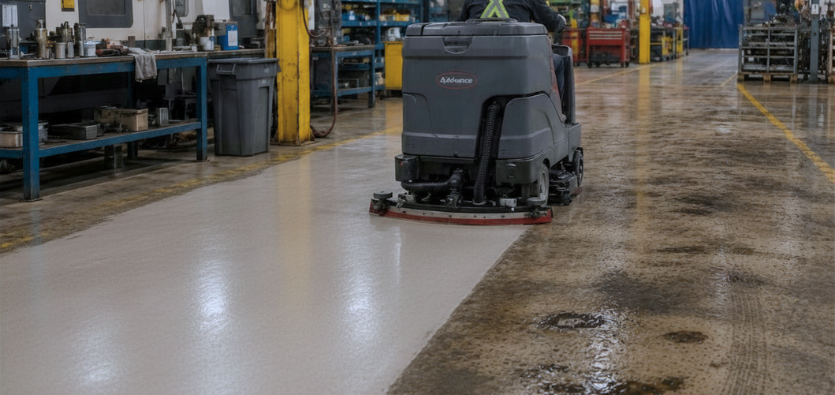 Yet many facilities expect one cleaning approach to handle all of it. That’s where problems start. Shop floors collect more than visible dirt. Oil, grease, dust, moisture, and production residue build up over time. Some stay on the surface. Some settle in. The result is simple. Floors take longer to clean, require more product, and consume more labour.Many facilities respond by cleaning more often. That’s not always the answer. Sometimes the problem isn’t the cleaning schedule. It’s the product being asked to do a job it wasn’t designed to do.
Start With the Contaminant, Not the Product
When cleaning results start slipping, many facilities immediately start comparing products. That’s understandable. But it’s often the wrong first step.We’ve seen facilities switch products more than once and still struggle with the same dirty floors. The issue wasn’t effort. The issue was that nobody stopped to identify what was causing the buildup in the first place.Different contaminants create different cleaning challenges. What works well on grease may not perform the same way on another type of residue. A product that delivers strong results in one area of a facility may fall short somewhere else. Before evaluating products, ask a simple question:What’s creating the mess?That answer matters more than most people think. Facilities that identify contamination first waste less time, less product, and less labour. The best product decisions start on the floor, not in a catalogue.Common Shop Floor Contaminants and What They Require
Not every shop floor is fighting the same battle. Some facilities deal with constant oil exposure. Others struggle with grease accumulation, forklift traffic, or production dust that seems to come back no matter how often the floor gets cleaned.Common contaminants include:- Hydraulic fluid that spreads well beyond the original leak
- Heavy grease buildup around maintenance and repair areas
- Lubricating oils from machinery and production equipment
- Forklift tire marks that gradually darken high-traffic routes
- Fine dust that combines with residue and moisture to form stubborn buildup
- Tracked-in dirt and debris from loading docks and exterior entrances
Why Floor Surface Matters When Choosing a Degreaser
Contamination is only half the equation. The floor itself matters too. A degreaser that performs well on sealed concrete may not be the best choice for another surface. The same applies to coated floors, painted surfaces, and specialized industrial flooring systems. That’s why product selection should always consider both the contaminant and the surface underneath it.This is where facilities sometimes run into trouble. They focus entirely on cleaning power and overlook compatibility. A stronger product isn’t automatically a better product. The goal is to remove contamination effectively while supporting the long-term condition of the floor. When those two objectives work together, facilities often achieve better cleaning results and more consistent maintenance costs.What to Look for in a Shop Floor Degreaser
Once you’ve identified the contamination and evaluated the floor surface, it becomes much easier to narrow your options.When comparing a degreaser, look for:- Cleaning performance against the specific contaminants present in your facility
- Dilution flexibility for different cleaning applications
- Compatibility with manual cleaning methods and floor-cleaning equipment
- Residue control to help prevent re-soiling
- Ease of use for maintenance and cleaning teams
- Cost-effectiveness across routine cleaning programs
